
Comprehensive care for every stage of your pet's life
From a routine dental check to the paperwork for an international move, we handle it in house — at our Westlands clinic or at your home, anywhere in Nairobi and its environs.
Dental Check-ups
30–45 minutes
Dental disease is the most commonly missed problem in Kenyan pets. By the time an owner notices bad breath or a reluctance to chew, the damage underneath the gum line is usually well advanced — and painful.
A routine dental examination catches it early. We assess every tooth and the surrounding gum under good light, chart what we find, and tell you plainly whether this is something to watch or something to treat.
What the appointment covers:
Full oral examination — Every tooth checked individually for fractures, mobility, and gum recession, with the findings recorded so we can compare against the next visit.
Gum and periodontal assessment — Grading of inflammation and pocket depth — the measurements that actually predict tooth loss, rather than a glance at the front teeth.
Scale and polish where indicated — Removal of tartar above and below the gum line, followed by polishing to slow the rate at which it returns.
Home care you will actually do — Realistic brushing, diet, and chew advice fitted to your pet’s temperament. A plan that gets followed beats a perfect one that does not.

Dental Surgery
45–90 minutes
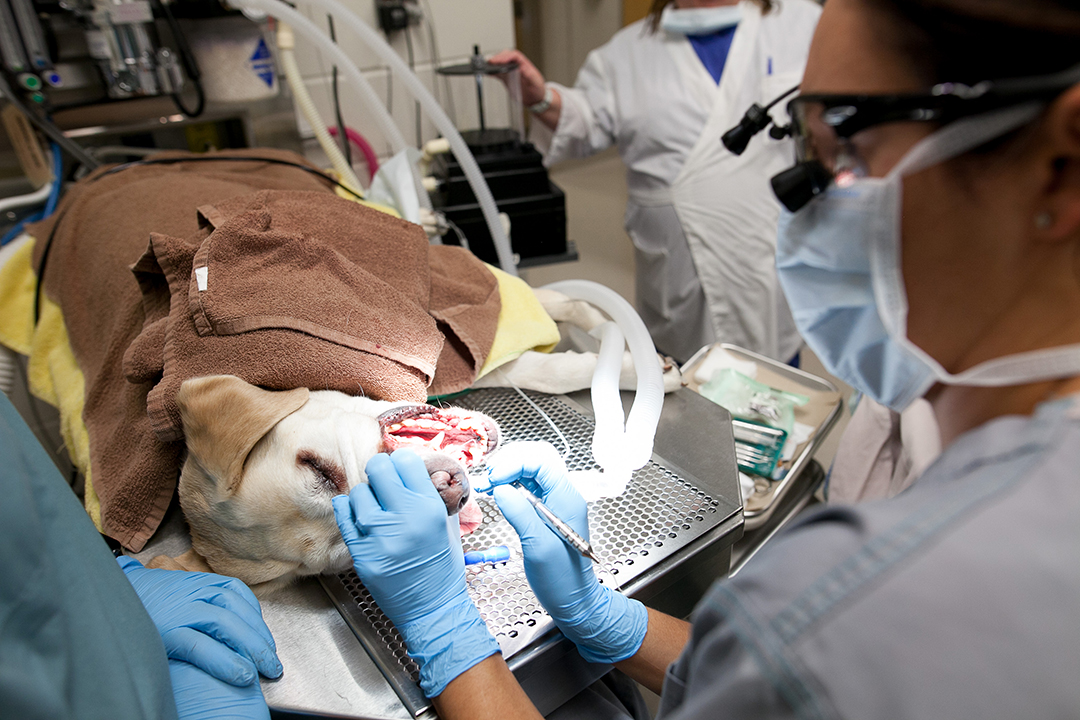
When a tooth is fractured, mobile, or supporting advanced periodontal disease, cleaning it will not help — it needs to come out. Extraction sounds drastic to most owners, but a painful tooth removed is almost always a pet that eats better and behaves better within a week.
Every surgical patient gets a pre-anaesthetic assessment, monitored anaesthesia, and pain relief before, during, and after the procedure. We would rather postpone a routine extraction than run it on an animal we are not confident about.
How we approach it:
Pre-anaesthetic assessment — Physical examination and, where age or history warrants it, bloodwork — so the anaesthetic plan is built around your pet rather than a standard protocol.
Monitored anaesthesia — Continuous monitoring throughout, with a dedicated person watching the patient rather than the clock.
Extractions and oral surgery — Surgical removal of fractured, mobile, or diseased teeth, with the socket closed properly to heal cleanly.
Pain management and recovery — Multimodal pain relief that continues at home, written discharge instructions, and a follow-up appointment. You will be told the specific signs that mean call us rather than wait.
Vaccinations
15–30 minutes
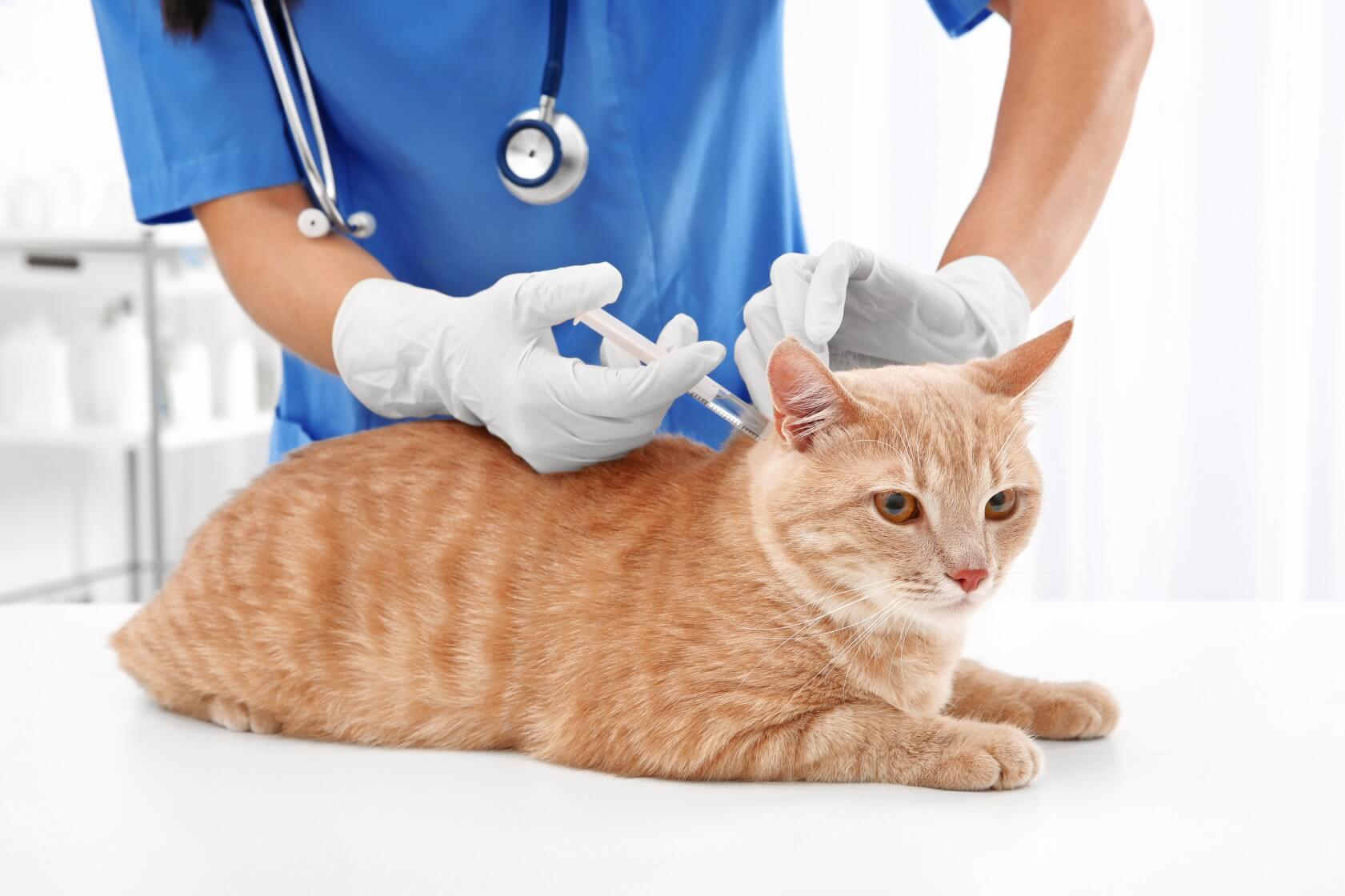
Kenya’s climate and the density of the animal population around Nairobi make several preventable diseases a genuine year-round risk. Rabies is endemic and vaccination is a legal requirement; parvovirus circulates continuously in urban areas and kills unvaccinated puppies quickly.
We follow international vaccination protocols adapted to Kenyan conditions, and build the schedule around your pet’s age, health, and lifestyle rather than handing you a generic card.
Core and lifestyle cover:
Rabies — Mandatory under Kenyan law. We issue a properly completed certificate — the same one you will need later for travel, boarding, or licensing.
DHPP for dogs — Distemper, hepatitis, parvovirus, and parainfluenza. Puppies start at 6–8 weeks with boosters every 3–4 weeks until 16 weeks, then annually.
FVRCP for cats — Feline viral rhinotracheitis, calicivirus, and panleukopenia, on the same staged schedule as puppies.
Leptospirosis — Worth having for dogs with outdoor access or exposure to standing water — which describes most of Nairobi during the long rains.
Schedule management — We hold your pet’s record and remind you when a booster falls due, so a lapsed vaccine does not derail travel plans months later.
Local & International Travel
45–60 minutes per visit
Moving a dog or cat across a border is a paperwork problem before it is a veterinary one, and the paperwork is unforgiving. A certificate dated a day outside its window, or a microchip that does not read to ISO standard, will stop a pet at the airport.
We run the whole process in house — exams, tests, permits, crate fitting, and the airline conversation. One veterinarian, one checklist, from the first vaccine to the arrival gate.
Some destinations need three to six months of lead time because of rabies titre testing. If you know a move is coming, talk to us early. That single decision prevents more cancelled flights than anything else we do.
What the process covers:
Microchipping & ISO registration — An ISO 11784/11785 compliant chip, implanted and registered, with a certificate. Almost every destination country and airline now requires one for identification.
Rabies vaccination & titre testing — A current rabies vaccination — given within the last 12 months and at least 30 days before travel — plus FAVN blood titre testing where the UK, EU, UAE and others require it. Titre results take weeks, which is what drives the long lead times.
Veterinary health certificate — Issued 3–4 days before departure and worded to carry the destination’s specific declarations. We confirm the current wording each time rather than reusing a template.
Kenyan export permit — Directorate of Veterinary Services clearance, valid for 14 days before departure. We handle the application and collection.
Bringing a pet into Kenya — For expatriates and returning residents, we arrange the VS01 import permit and veterinary clearance on arrival, and coordinate with a clearing agent where customs handling is needed.
IATA-compliant travel crates — Correct sizing for your pet, a pre-flight fitting, and conditioning advice so the crate is familiar well before the day of the flight.
Airline & route checks — Breed restrictions, temperature embargoes, and cargo rules differ by carrier and change often. We confirm against the specific airline and routing you intend to book.
Document pack — Owner passport details, consignee name and address, the airway bill, and every original certificate assembled in one folder. All originals travel with the animal.

Deworming
15–20 minutes
Intestinal worms are close to universal in puppies and kittens, and common enough in adults that a routine schedule is worth more than reacting to symptoms. Several of them — roundworm in particular — also pose a risk to children in the household.
Dosing is by weight, not by guess. We weigh the animal, dose accordingly, and set the interval based on age and how much of the day your pet spends outdoors.
What we provide:
Weight-based dosing — Measured on the day rather than estimated. Underdosing is the most common reason a deworming course fails.
Broad-spectrum cover — Treatment covering roundworm, hookworm, whipworm, and tapeworm, chosen for the parasites we actually see in Nairobi.
Age-appropriate schedule — Puppies and kittens every two weeks until twelve weeks, then monthly to six months. Adults quarterly, or more often with high outdoor exposure.
Household advice — Practical guidance on faecal clean-up and hygiene where there are small children, since some species transmit to people.

Tick & Flea Control
20–30 minutes
Nairobi’s warm weather means ticks and fleas do not have an off season, and the diseases they carry — ehrlichiosis, babesiosis, anaplasmosis — are common enough that we see them weekly rather than occasionally.
Control only works when it is continuous. We set a treatment interval, keep the record, and adjust it if your pet’s exposure changes.
Prevention and treatment:
Long-acting preventives — Oral and topical options chosen for your pet’s weight and coat, and for whether there are small children or other animals in the household.
Tick-borne disease testing — If your pet is lethargic, off food, or bruising unexpectedly after tick exposure, we test rather than guess. Early treatment is the difference that matters.
Flea allergy management — Treatment for the dermatitis that follows an infestation, alongside the preventive that stops it recurring.
Environmental control — Treating the animal without treating the compound rarely holds. We advise on bedding, kennel, and yard management that breaks the cycle.

Pet Nutrition Advice
Variable
Weight is the single most modifiable factor in how long a pet stays comfortable, and it is the thing owners are most often given vague advice about. We measure, set a target, and review it.
Advice is built around food you can actually buy in Nairobi, at a price that works — not a theoretical diet that lasts three weeks.
What we cover:
Body condition scoring — A scored, repeatable measurement rather than an impression, so progress between visits is visible instead of debatable.
Life-stage feeding plans — Puppies and kittens need frequent small meals; seniors need digestibility. We set portions and frequency in writing.
Therapeutic diets — For renal disease, urinary conditions, food allergy, and diabetes, with sourcing advice for what is genuinely stocked locally.
Hydration in warm weather — Guidance on water access, wet versus dry food, and feeding times. Dehydration builds faster here than most owners expect.
Foods to avoid — A clear list — chocolate, grapes and raisins, onions and garlic, avocado, macadamia — and what to do if your pet gets into one.

Not sure which service your pet needs?
Tell us what you're seeing and we'll tell you honestly whether it needs a visit today, an appointment this week, or nothing at all.
18 Westlands Road, Nairobi · Open 24 hours · Home visits available